Oldest known Furneaux Fortification - 1086
Oldest known location of a Furneaux castle - with pictures!

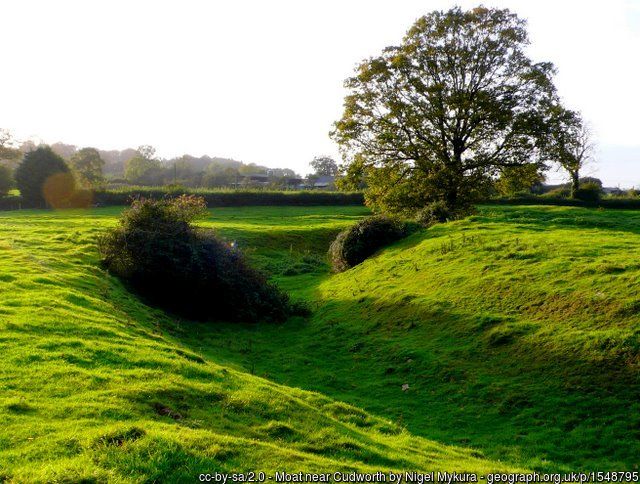
Following the Norman Conquest, William parcelled out land to nobles in return for their political, financial and military support. Odo de Fourneaux is listed as Lord of Cudworth in the Domesday Book, and also in the Exon Domesday. While some secondary sources suggest Odo held Cudworth "in capite" - in other words, holding the land as a Lord in his own right, being granted directly from the King, this is not supported by the Domesday records. In both he holds the lands as Lord from the Tenant in Chief (who is the one who held directly from the crown) Roger Arundel who had over 40 such properties.
Meaning of 'Cudworth'
The location name is made of two parts Cuda (a Saxon first name) and Worth (enclosure). Thus Cudworth meant Cuda's enclosure.
Importance of the Settlement
- Cudworth Moat was important as it is known as listed as a Fortified Manor House.
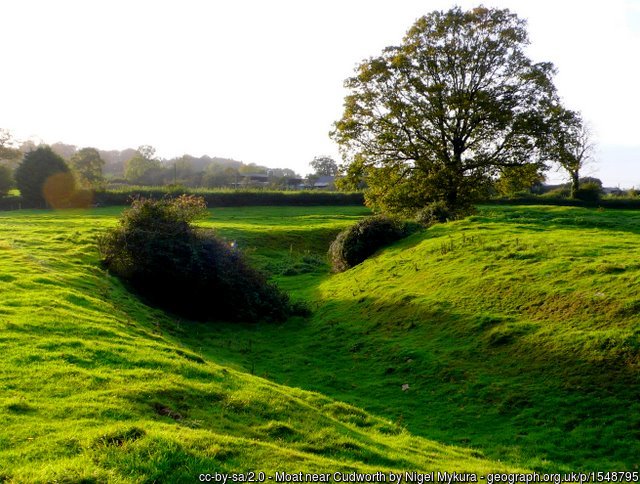
- As far as fortifications go, moated sites are generally seen as the prestigious residences of the Lords of the manor, the moat marking the high status of the occupiers but also serving to deter casual raiders and wild animals.
- It had 8 households so is in the smallest 40% of settlements recorded in the Domesday
- It is, however, listed as a scheduled monuments or nationally important archaeological sites.
- The medieval village of Cudworth, can be seen to the right in the google earth view below (see the lines running north south and east west to the right of the plowed field. The village is likewise listed as a scheduled monument.
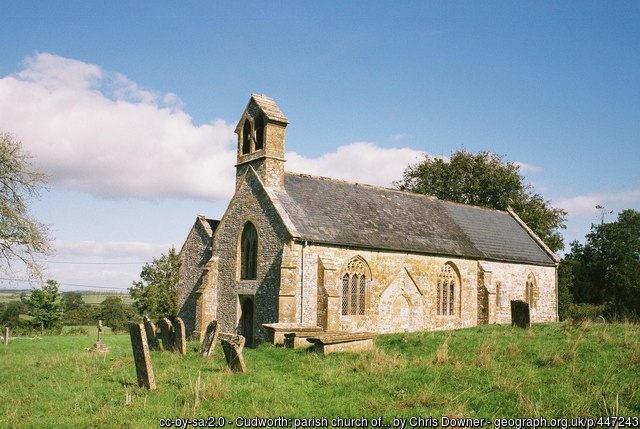
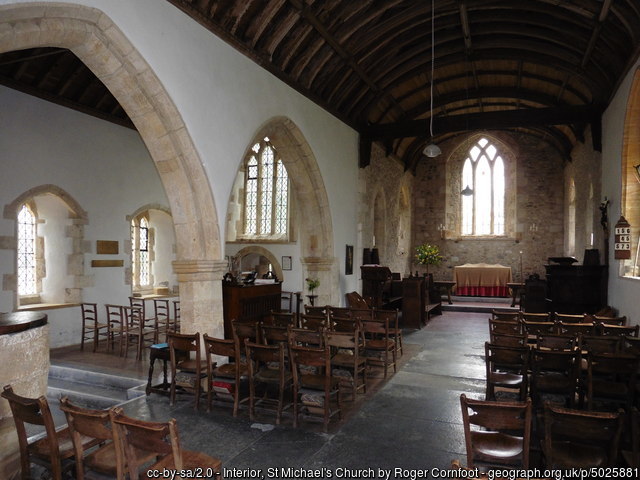
- Sant Michael Church to the north of the manor house mound, is also listed as archeologically important . Alan de Furneaux gifted the church to Wells Cathedral in 1186.
- The actual age of the moated site, may date to later around 1300 AD but the site is tied to multiple generations of Furneaux
Historic England
In the aerial picture below, you can see the moat and where the manor house would have stood at the top left (square and rounded square). The church is just north of them. The village is to the right. Knight House Farm is bottom left, situated on Knight's Lane.
Below is a ground level view of the moat, and inside and outside of the church.
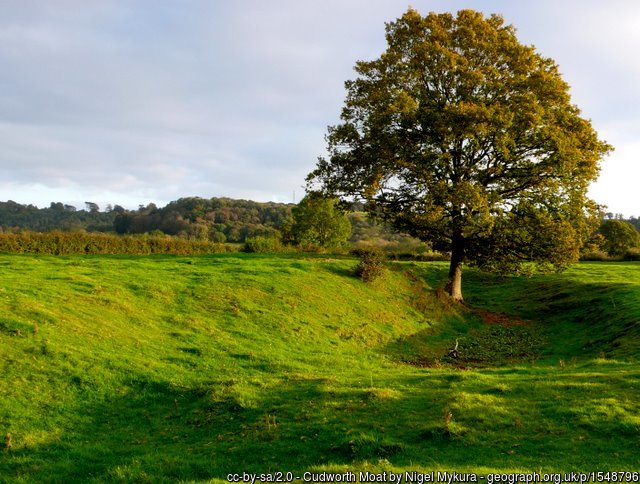
As the site has not been excavated, so it is not known what lies under the mound of where the manor sat. However typically:
chapelwallEncyclopaedia Britannica